

Make Good Choices
November Newsletter · 2026
Tiny joys · Kindness Cards are here
A dimmer switch, not a light switch.
This month: what actually landed with you, what the research says about small good things, and one three-a-week habit that asks very little of you.
A note from Mik

Hey — I'm not at 100%, and I've stopped waiting until I am before doing the things that feed me.
This month that's been tennis at the Rainbow Games in New Zealand, time with the people who mean the world to me, and a lot of quiet work on MGC: website updates, new ideas, new content. I'm trying to be kind to myself and to everyone around me, and some days that's easier than others.
What landed this month
- "What's one tiny thing that's making your life feel good right now?" This was the post that got the most views and the most replies, by a long way. I didn't do anything clever with it. I just asked a simple question, and so many of you answered it.
- Simple beats big. The pattern this month was clear: the things that land are small, easy and bring a bit of joy, whether that joy is big or tiny. Nobody needed a 12-step plan. They needed permission to enjoy something small, and a reminder that it counts.
- Telling you the honest version. I talked about what coming out of depression is actually like for me. A lot of you said it was the first time anyone had described it in a way that matched your own experience. Thank you for letting me be honest.
"It's a dimmer switch, not a light switch. It goes up, it goes down, it ebbs and flows."
Mik, on coming out of depression
Why the tiny stuff counts
This piece was finished with the help of AI.
Small joys can feel too small to count, especially when life is heavy. So I went looking for what the research says.
When I asked about tiny good things, part of me wondered if people would feel a bit awkward answering. A few Australian researchers have been asking the same question.
Macquarie University: what everyday habits go with good mental health?
Professor Nick Titov and Dr Madelyne Bisby, from the MindSpot mental health service, set out to find which everyday behaviours are most linked to good mental health. Across two studies of around 3,000 people each, five groups of behaviour stood out.
The five groups, in order of how much they mattered
Here's the part that stuck with me. Those are the first things most of us drop when we're struggling, right when they'd help the most. The researchers also found that the gap in how often people with severe symptoms and people with healthy mood did these things was smaller than you'd expect, which suggests doing them a little more often can help people cross a line.
Continue readingShow less
That's an association, not a cure. But it's not a lifestyle overhaul either. It's tennis on a Saturday and a coffee with a friend.
Southern Cross University: noticing what feels good
Dr Desirée Kozlowski, who researches pleasure and emotional intelligence, coordinated the National Pleasure Audit, a survey asking Australians what small pleasures they enjoy and how much effort they put into savouring them. She told ABC News that savouring everyday pleasures, like the smell of coffee or a hot shower, can become a healthy habit, and that people have long dismissed it as "kind of fluffy".
I love that. Noticing what feels good seems to shift things all by itself. An earlier, smaller Southern Cross study (42 people) found a short workshop on savouring led to lower perceived stress two weeks later, though whether the gains last is still an open question.
Overseas: the Big Joy Project
Run by UC Berkeley, the Big Joy Project had more than 17,000 people spend 5 to 10 minutes a day for a week on small acts like gratitude, kindness and pausing to take something in. Participants reported lower stress and better wellbeing and sleep, and the people who started with the lowest wellbeing benefited most.
One honest caveat: about 84% of participants were women, and the results are self-reported, so I wouldn't treat it as the final word.
One more idea I'm taking from this. The Conversation has pointed out that chasing happiness can backfire, while noticing small moments of joy doesn't ask you to be happy at all. That's very MGC. You don't have to feel good about your whole life. You just have to notice one good thing.
And on the dimmer switch: the UK charity Rethink Mental Illness says depression can come and go, with symptoms stronger at some times and lighter at others, and that early support can make a real difference if they return. A wobble isn't a failure. It's a part of how this goes for a lot of people.
If this brought something up for you, you don't have to sit with it alone. Lifeline: 13 11 14 | Beyond Blue: 1300 22 4636
Sources:
- Macquarie University: The five keys to good mental health (Titov & Bisby, MindSpot)
- ABC News via inkl: National Pleasure Audit launched to investigate what brings Australians joy
- Southern Cross University: "The very process made me happier!" (Kozlowski, Provost & Kern, Journal of Positive Psychology, 2025)
- Frontiers in Psychology conference abstract: Maximising life's small pleasures and its effect on well-being (Southern Cross University, 2018)
- Flinders University: What is a micro-act of wellbeing? (on the Big Joy Project)
- The Conversation: Finding joy in the little things really can benefit your wellbeing
- Rethink Mental Illness: Can depression come and go?
The three-a-week tiny joy
Pick one small thing that makes you feel good. It can be a hot shower, a walk around the block, a song you love, ten minutes in the sun, a proper cup of tea. Make it something you'd actually enjoy, not something you think you should.
Pick one
Something you'd genuinely enjoy.
Do it three times this week
No need to be consistent about the days.
Give it a minute
Full attention. Notice the warmth, the taste, the sound. That minute is the whole trick.
Stuck for ideas? Here are a few that cost nothing:
- Step outside for the first few minutes of sunlight
- Put on one song and actually listen to it
- Make a drink and drink it before it goes cold
- Text a friend a photo of something that made you smile
- Sit with your feet on the ground and take three slow breaths
Some will land and some won't. That's useful information, not a failure. Swap it for something else next week.
Turn it up or down to suit the week
Try to keep it about enjoyment, not improvement. This isn't a to-do list item or a habit you have to get right. If you catch yourself turning it into a performance, let that one go and choose something easier.
The aim isn't to feel amazing. It's to give your day one small point of light you chose for yourself. And if you miss a day, nothing's broken. Pick it back up whenever you're ready.
One bit of light each
After the "what makes you feel good" post, my replies filled up with ordinary good things:
- A morning walk before work
- A cat named Achille, who arrived with an adorable photo
- A good coffee
- Someone making their first coffee after a huge struggle
That last one made me smile for a long time.
What I loved most wasn't any single answer. It was reading them all together. So many small, ordinary, good things, written down by people who'd stopped for a moment to notice, and some of them in the middle of something hard. A bunch of us, each looking for one bit of light and sharing it with strangers. That's the community I hoped MGC would be.
If you replied, thank you. I read every one.
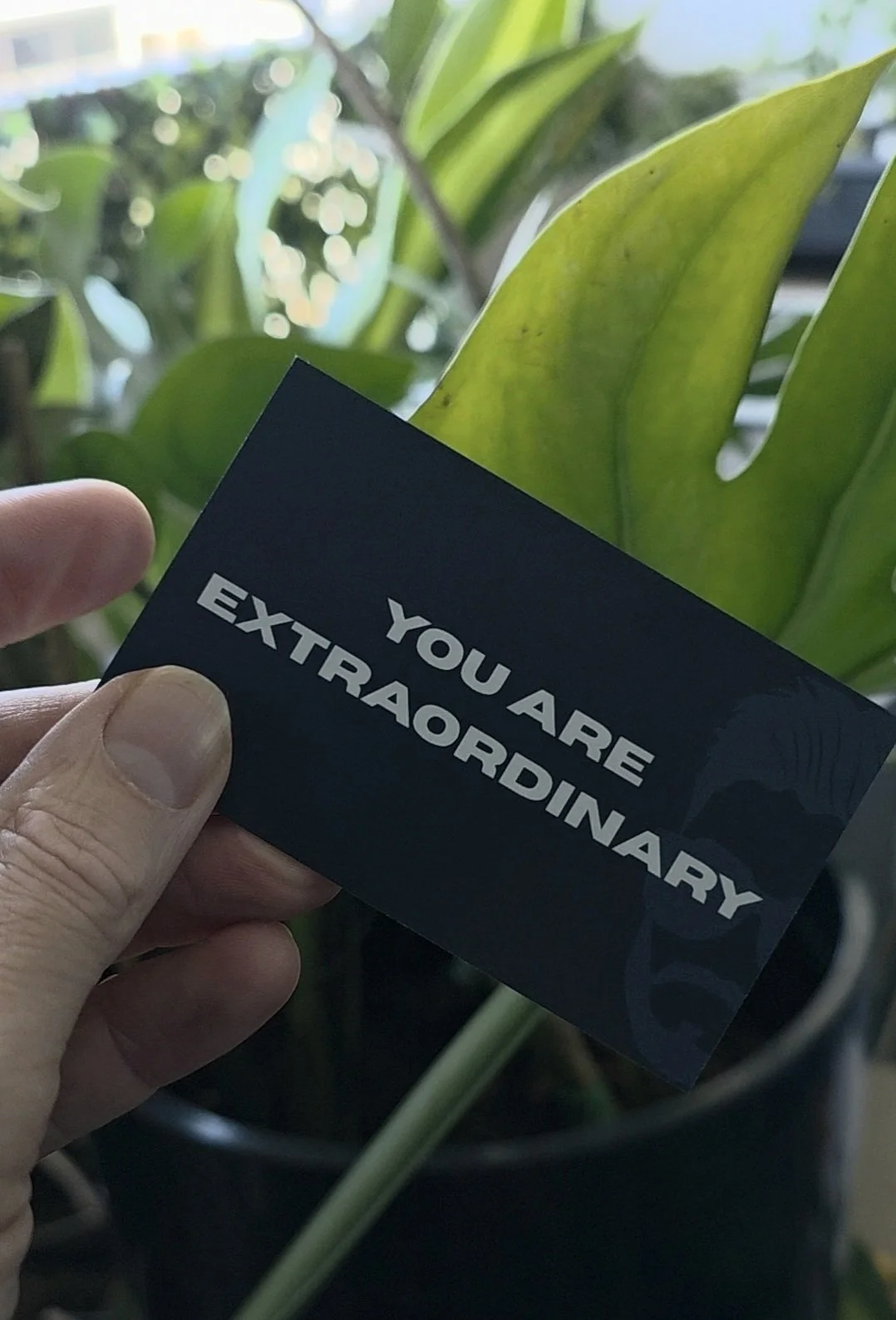
The Kindness Cards are here
I'm really happy to say the Kindness Cards are now in the shop. They're small enough to carry in a pocket, and each one holds the line behind everything we do:
"You are Extraordinary, you being here adds to the light around us."
I think of them as tiny joys you can hand to someone else. Slip one to a friend who's having a rough week, leave one in a café or a gym or a library for a stranger who might need five seconds of being seen, or keep one for the days you need to read it twice. There's nothing you need to do with them. If one of them finds its way to someone, that's enough.
This month made the idea feel even more real to me. When I was low, it was small things from other people that got through: a message, a kind word, someone noticing. Those little moments matter more than they look like they should. The cards are just a way of making that easy to pass on.
Before you go
Thank you for being here, and for noticing the small good stuff, even on the weeks that don't make it easy. If this month is a dimmer-switch kind of month for you too, that's okay. You're allowed to be human. Be gentle with yourself this week.
— Mik